Online gaming is now part of everyday life for many children. As a parent, you may feel unsure about what your child is playing, who they are talking to, and how much time is healthy. This guide is here to help you understand online gaming clearly, so you can support your child without fear, confusion, or unnecessary restrictions.
We will walk through what online gaming really is, its benefits, risks, and how you can set healthy boundaries that actually work.
What Is Online Gaming and Why Do Kids Love It?
Online gaming means playing games over the internet, often with or against other people. This can be on a phone, tablet, console, or computer.
For children, it is more than “just a game.” It is entertainment, social time, challenge, and sometimes even identity.
The Social Side of Online Games
Many games allow voice or text chat. Children use games to talk, laugh, and feel connected to friends.
For some kids, especially shy ones, gaming feels easier than face-to-face interaction.
The Sense of Achievement and Progress
Games reward effort with levels, badges, and new abilities. This gives children a strong feeling of progress and success.
That feeling can be very motivating, especially for kids who struggle in school or sports.
Is Online Gaming Safe for Children?
This is usually the first question parents ask. The honest answer is: it can be safe, but only with guidance.
Common Risks Parents Should Know
Online gaming can expose children to:
- Inappropriate language or behavior
- Strangers who may not be who they claim
- Pressure to spend money on in-game items
- Excessive screen time
These risks are real, but manageable.
Why Awareness Matters More Than Fear
Trying to ban gaming often leads to secrecy. Understanding what your child plays builds trust and keeps you involved.
When children feel safe talking to you, problems surface early.
How to Choose Age-Appropriate Games
Not all games are suitable for all ages. Age ratings exist for a reason, but they are only a starting point.
Understanding Game Ratings Simply
Ratings give guidance on:
- Violence
- Language
- Fear or horror elements
- Online interaction
They do not always show how intense or addictive a game may feel.
Looking Beyond the Rating
Watch gameplay videos. Ask your child to show you the game.
You will quickly see if it fits your values and your child’s maturity level.
How Much Gaming Is Too Much?
There is no perfect number, but balance is the goal.
Signs Gaming Is Healthy
- Your child still does homework
- They sleep well
- They enjoy other activities
- Mood is stable
Signs It May Be a Problem
- Anger when asked to stop
- Ignoring responsibilities
- Loss of interest in everything else
- Mood changes after gaming
These are signals to adjust limits, not punish.
How to Set Healthy Gaming Boundaries
Rules work best when they are clear, fair, and consistent.
Creating Simple, Realistic Rules
Examples:
- No gaming before homework
- Devices off one hour before bed
- Gaming only in shared spaces
Avoid long rule lists. Simple rules are easier to follow.
Involving Your Child in the Rules
When children help create the rules, they respect them more.
Ask: “What do you think is a fair amount of gaming time?”
This builds responsibility instead of rebellion.
How to Protect Your Child Online
Safety settings exist for a reason. Use them.
Using Parental Controls
Most consoles, phones, and PCs allow you to:
- Limit chat
- Block strangers
- Set time limits
- Control spending
Take 10 minutes to set them up. It is worth it.
Teaching Smart Online Behavior
Tell your child:
- Never share real name, address, or school
- Do not accept friend requests from strangers
- Come to you if anything feels uncomfortable
Make sure they know they will not get in trouble for being honest.
Should Parents Play Games With Their Kids?
If possible, yes.
Why Playing Together Helps
You see:
- What the game is really like
- How your child behaves in it
- Who they interact with
Your child also feels understood, not judged.
Even Watching Is Helpful
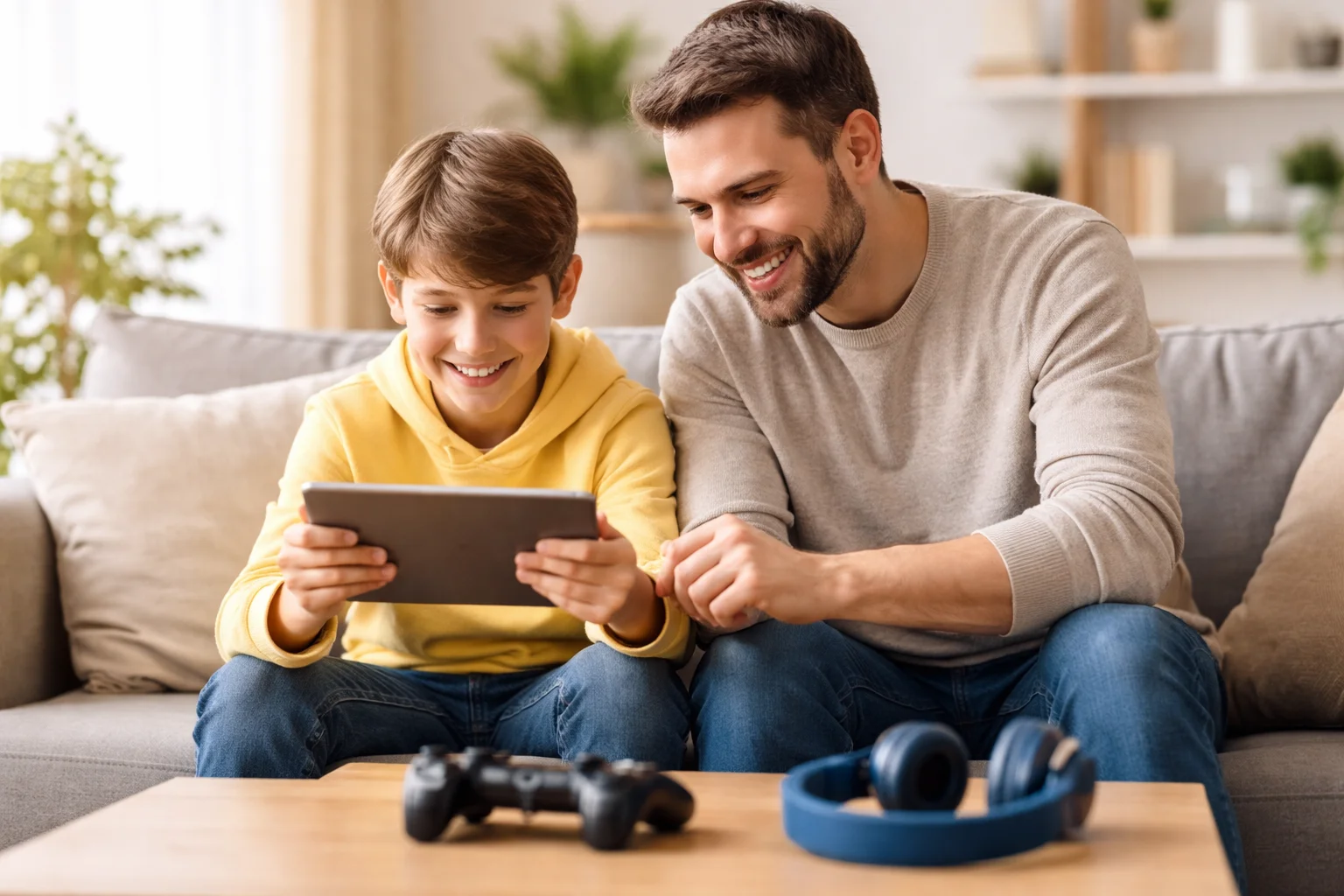
If you cannot play, sit and watch sometimes. Ask questions. Show interest.
This small effort builds huge trust.
How Online Gaming Can Actually Help Children
When balanced, gaming can offer real benefits.
Building Skills Through Games
Many games improve:
- Problem-solving
- Teamwork
- Reaction speed
- Strategic thinking
Some children even improve reading and communication through games.
Emotional Benefits
Games can:
- Reduce stress
- Boost confidence
- Help children feel connected
The key is moderation, not removal.
How to Talk to Your Child About Gaming
Conversations matter more than controls.
Asking Without Accusing
Instead of: “Why are you always gaming?”
Try: “What do you enjoy most about this game?”
This opens dialogue instead of defense.
Listening Without Judging
Even if you do not like the game, respect their interest. You do not need to love it to support them.
FAQ – Parents Often Ask
Is online gaming bad for my child’s brain?
No. When balanced, it can support problem-solving and coordination. The issue is not gaming itself, but too much of it.
Should I ban voice chat?
Not always. It can be social and positive. Use settings and monitor instead of banning immediately.
What age is safe for online games?
It depends on the child’s maturity and the game content, not just age. Always review the game first.
Final Thoughts
Online gaming is part of modern childhood. It is not something to fear, but something to guide.
When you understand the games, set fair limits, and keep communication open, gaming becomes safer and healthier.
Your role is not to control every move, but to protect, support, and stay connected.
With the right approach, online gaming can be a positive part of your child’s life.